As global industries face unprecedented labor shortages and rising operational costs, humanoid robots have transitioned from sci-fi concepts to viable commercial assets. For B2B decision-makers, the question is no longer "if" but "when" and "how much." Calculating the Return on Investment (ROI) for such sophisticated humanoid robots requires more than just comparing a monthly paycheck to a purchase price; it requires a deep dive into long-term value creation.
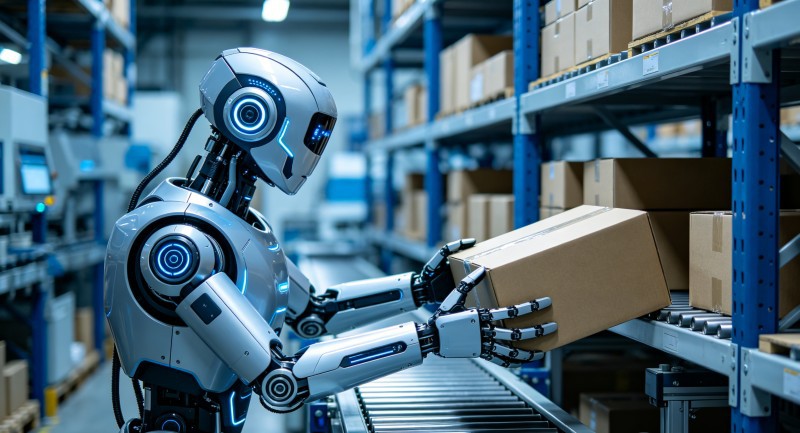
Why Humanoid Robots are Reforming Industrial Automation in 2026?
The shift toward embodied AI means that automation is no longer confined to cages or fixed tracks. Modern humanoid robots offer the unique ability to navigate human-centric environments without requiring a total redesign of your facility. This "drop-in" compatibility is the first step toward a positive ROI, significantly lowering the initial integration costs associated with traditional fixed automation.
Breaking Down the ROI: 5 Essential Metrics for B2B Buyers
To build a compelling business case for procurement, stakeholders must look beyond the sticker price and analyze these five critical performance indicators.

1. Labor Cost Displacement & Multi-Shift Reliability
The most immediate metric is the reduction in Total Cost of Ownership (TCO) compared to human labor. Unlike human staff, humanoid robots can operate across three shifts without fatigue, overtime pay, or health insurance premiums. When calculating ROI, factor in the "fully loaded" cost of a human worker (including training and turnover) versus the amortized cost of the robot over its operational life.
2. Cycle Time Reduction and Throughput Efficiency
Evaluate how humanoid robots impact your production line's throughput. With advanced computer vision and rapid processing, these machines can minimize idle time. By measuring the "Units Per Hour" (UPH) increase, businesses can quantify the direct revenue growth attributed to the deployment of robotic fleets.
3. Safety Compliance and Reduced Liability Costs
In high-risk sectors such as chemical processing or heavy manufacturing, the "hidden ROI" lies in safety. Deploying humanoid robots in environments with heavy payloads or hazardous materials significantly lowers workplace injury claims. This leads to lower insurance premiums and avoids the massive legal and operational costs associated with industrial accidents.
4. Flexibility and Reprogramming Versatility
The value of a humanoid robot [ https://yourlink-A.html ] lies in its general-purpose nature. Unlike specialized machinery that may become obsolete when a product line changes, humanoid platforms can be reprogrammed or updated via over-the-air (OTA) software patches. This adaptability ensures that your capital expenditure (CAPEX) remains productive even as your business model evolves.
5. Longevity and Maintenance Lifecycle Costs
B2B buyers must scrutinize the Mean Time Between Failures (MTBF). A high-quality humanoid robot with a 5- to 8-year lifecycle and modular components ensures that maintenance costs don't erode your initial gains. Consider the cost of "Robotics-as-a-Service" (RaaS) models, which often include maintenance in a predictable monthly Operating Expense (OPEX).
Overcoming Implementation Barriers in Humanoid Robotics
While the upfront investment can be substantial, the integration of advanced humanoid robots into a smart factory ecosystem often yields a payback period of less than 24 months in high-cost labor markets. By focusing on scalability and data-driven performance, enterprises can mitigate the risks of early adoption while securing a competitive edge in manufacturing and logistics.
FAQ
Q: What is the average price of an industrial humanoid robot in 2026?
A: While prices vary by payload and AI complexity, industrial-grade models typically range from $50,000 to $150,000. Many vendors now offer RaaS (Robotics-as-a-Service) to lower the entry barrier.
Q: How long does it take to see ROI on humanoid robots?
A: Most B2B enterprises report a full ROI within 18 to 30 months, depending on the complexity of the tasks and the local cost of labor.
Q: Can humanoid robots work safely alongside humans?
A: Yes. Modern humanoid robots are equipped with advanced LiDAR, pressure-sensitive "skin," and tactile sensors to ensure ISO-compliant human-robot collaboration (HRC).
Q: What are the main maintenance costs for these robots?
A: The primary ongoing costs include software subscription fees for AI updates, battery replacement every 2–3 years, and periodic calibration of joint actuators.
Q: Which industries benefit most from humanoid robotics?
A: Currently, logistics, automotive assembly, hazardous waste management, and pharmaceutical labs show the highest ROI for humanoid robots due to the repetitive or dangerous nature of the work.
Conclusion
Investing in humanoid robots is a strategic move toward future-proofing your operations in an increasingly automated world. By focusing on these 5 key ROI metrics-ranging from labor displacement to long-term versatility-your business can ensure a sustainable and profitable transition to the era of embodied artificial intelligence.